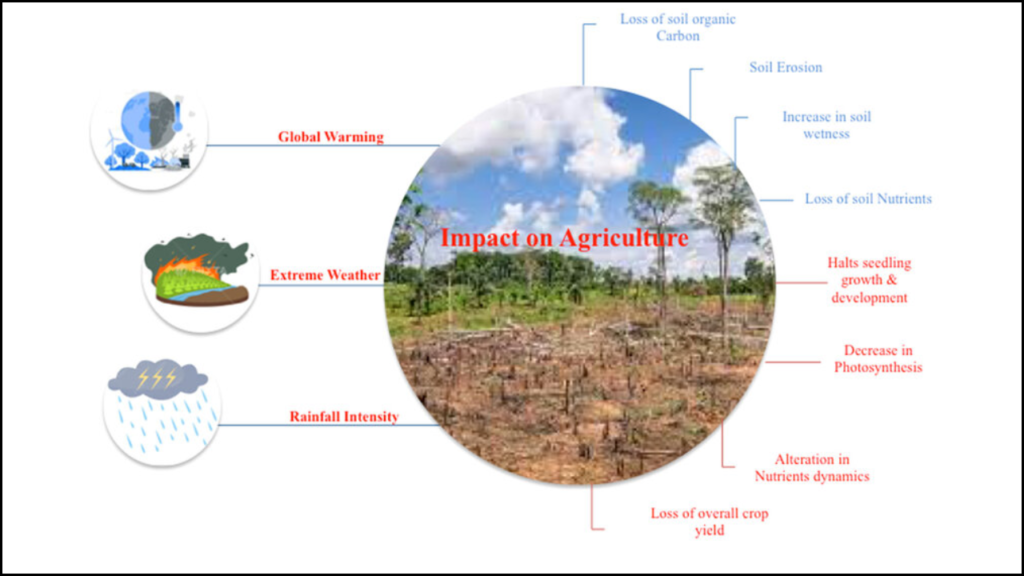
Climate change is increasingly influencing the distribution, productivity, and quality of forage crops worldwide. Changes in temperature, rainfall patterns, and the frequency of extreme weather events affect both grass and legume species used in livestock feeding. Shifts in climate zones can alter the suitability of traditional forage crops, forcing farmers to adapt their cropping strategies. Understanding these impacts is critical for maintaining feed security, optimizing livestock nutrition, and ensuring sustainable agricultural systems under changing environmental conditions.
Table of Contents
Overview
| Aspect | Details |
|---|---|
| Key Factors | Temperature rise, altered rainfall, and CO₂ concentration |
| Affected Crops | Ryegrass, Timothy, Alfalfa, Clover, Sorghum-Sudan |
| Impacts | Growth rate changes, nutrient content variation, and altered distribution |
| Adaptation | Species selection, irrigation, mixed cropping |
| Risks | Reduced yield, soil degradation, pests, and disease outbreaks |
Temperature Effects
- Rising temperatures influence germination, growth rate, and seasonal productivity of forage crops.
- Cool-season species such as ryegrass and Timothy may experience reduced growth in hotter regions, while warm-season grasses like Bermuda and Sorghum-Sudan may expand into previously cooler areas.
- Heat stress can decrease leaf area, reduce protein content, and limit biomass accumulation.
- Optimal planting dates and heat-tolerant varieties are essential to mitigate negative effects.
Temperature changes also affect livestock grazing patterns, as altered forage availability may necessitate adjustments in grazing management and supplemental feeding.
Rainfall and Water Availability
- Altered rainfall patterns can lead to droughts or waterlogging, both of which negatively impact forage crop growth.
- Drought stress reduces leaf area, root development, and nutrient uptake, lowering yield and quality.
- Excessive rainfall may cause root diseases, nutrient leaching, and reduced forage palatability.
- Irrigation and soil moisture conservation techniques are key adaptation measures to stabilize forage production.
Efficient water management ensures continued forage availability and helps maintain consistent feed quality during variable climatic conditions.
CO₂ Concentration and Growth
- Elevated atmospheric CO₂ can enhance photosynthesis and water-use efficiency in some forage crops, potentially increasing biomass.
- However, increased CO₂ may reduce protein content, altering nutritional balance for livestock.
- Legumes benefit more from higher CO₂ due to improved nitrogen fixation, but nutrient dilution may occur if growth outpaces nitrogen availability.
- Adjusting fertilizer management and species composition can help maintain forage quality under changing CO₂ levels.
Managing the balance between increased biomass and nutrient content is critical for maintaining livestock performance.
Pest and Disease Pressure
- Climate change alters the distribution and lifecycle of pests and pathogens affecting forage crops.
- Warmer temperatures and higher humidity can increase the prevalence of leaf diseases, root rots, and insect infestations.
- Stress from heat or drought makes crops more susceptible to pathogens, reducing both yield and quality.
- Integrated pest management, resistant varieties, and proper field sanitation become essential under changing climates.
Proactive monitoring and adaptive pest control strategies help minimize losses and ensure a reliable forage supply.
Shifts in Geographic Distribution
- Regions traditionally suitable for cool-season forages may become less productive, necessitating the introduction of heat-tolerant or drought-resistant species.
- Conversely, warm-season grasses may expand northward in temperate regions, changing pasture composition and management needs.
- Mixed-species pastures can buffer against climate variability, maintaining productivity despite changing environmental conditions.
- Planning for future climatic scenarios ensures a sustainable forage supply and supports livestock systems’ resilience.
Diversifying forage crops and adjusting management practices reduces risk and maintains feed security under shifting climate conditions.
Adaptation Strategies
- Selecting climate-resilient forage species and varieties suited to local conditions.
- Implementing mixed cropping and legume-grass combinations to improve soil fertility and pasture resilience.
- Employing irrigation, mulching, and soil conservation practices to manage water stress.
- Adjusting planting schedules, harvest times, and grazing management to match changing growth patterns.
- Monitoring pests, diseases, and nutrient status to enable timely interventions.
Adaptive strategies enable farmers to maintain both forage quality and yield while mitigating climate-related risks.
In Summary
Climate change significantly impacts forage crop distribution, productivity, and nutritional quality. Rising temperatures, altered rainfall, and elevated CO₂ affect growth patterns, species suitability, and pest pressures. Proactive adaptation through species selection, water management, integrated pest control, and mixed cropping is essential to sustain livestock feed supply. By implementing these strategies, farmers can maintain high-quality forage, support animal performance, and promote resilient, sustainable livestock production systems under changing environmental conditions.