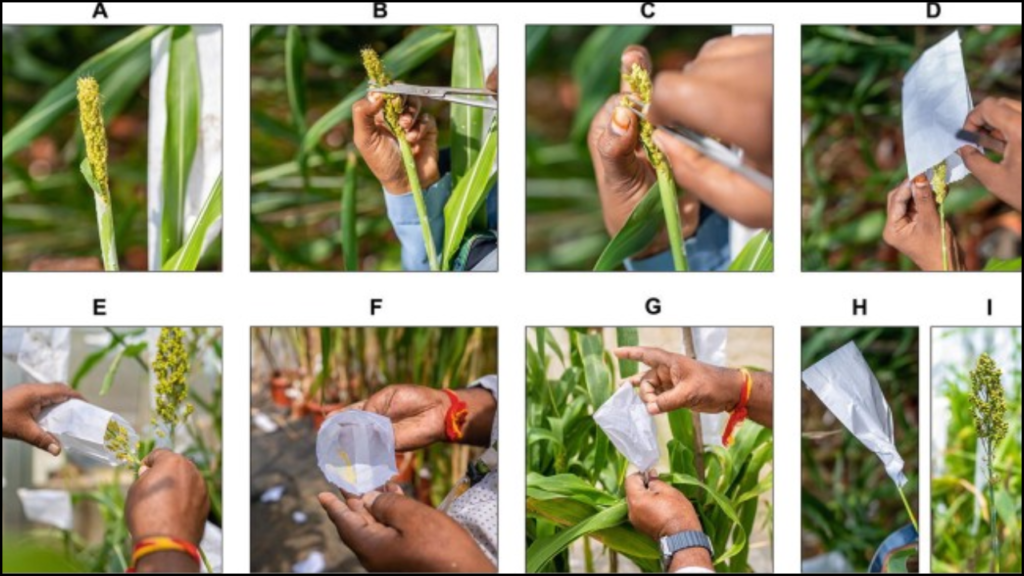
Sorghum (Sorghum bicolor) is a critical cereal crop grown for food, fodder, and biofuel production, especially in semi-arid regions due to its drought tolerance and adaptability. Hybrid vigor, or heterosis, refers to the superior performance of hybrid offspring compared to their parental lines, often manifesting as increased yield, stress tolerance, and overall biomass. Understanding the genetic basis of hybrid vigor in sorghum is essential for optimizing breeding programs, enhancing productivity, and ensuring food security in challenging environments.
This article explores the genetic mechanisms, breeding strategies, and agricultural implications of hybrid vigor in sorghum, emphasizing its significance for modern crop improvement.
Table of Contents
Hybrid Vigor in Sorghum
| Aspect | Significance |
|---|---|
| Trait Focus | Yield, biomass, stress tolerance |
| Genetic Basis | Dominance, overdominance, epistasis |
| Breeding Strategies | Parental line selection, heterotic grouping |
| Applications | Grain, forage, biofuel production |
| Agronomic Benefits | Increased productivity, stability under stress |
Understanding Hybrid Vigor
Hybrid vigor arises when the progeny of genetically distinct parents outperform either parent in terms of growth, yield, and resilience. In sorghum, heterosis is particularly valuable because it allows high yields in regions with unpredictable rainfall and poor soil fertility. Hybrid cultivars consistently produce higher grain yield, taller plants, improved biomass, and better tolerance to biotic and abiotic stresses compared to inbred parental lines.
The extent of hybrid vigor depends on the genetic divergence of parental lines, environmental conditions, and specific traits under consideration. Maximizing heterosis requires careful selection and evaluation of parental germplasm.
Genetic Mechanisms
Three major genetic hypotheses explain hybrid vigor in sorghum:
- Dominance Hypothesis: Superior hybrids result from masking deleterious recessive alleles present in one parent by dominant alleles from the other parent.
- Overdominance Hypothesis: Heterozygotes at certain loci exhibit superior performance compared to either homozygous parent.
- Epistasis: Interaction between genes at different loci contributes to enhanced performance in hybrids.
These mechanisms collectively influence yield components, stress tolerance, and other agronomic traits. Understanding the genetic basis allows breeders to exploit heterosis more effectively.
Parental Line Selection
The success of hybrid sorghum depends on selecting genetically diverse and complementary parental lines. Heterotic grouping is commonly used to classify germplasm into distinct groups based on genetic distance and combining ability. Crosses between lines from different heterotic groups generally produce higher heterosis.
Elite inbred lines are evaluated for traits such as grain yield, drought tolerance, disease resistance, and plant architecture. Lines with strong general combining ability contribute to consistent hybrid performance across environments.
Breeding Strategies
Hybrid sorghum breeding employs several strategies to maximize heterosis:
- Line × Tester Analysis: Evaluates combining ability between inbred lines and testers to identify superior parental combinations.
- Reciprocal Recurrent Selection: Enhances traits in two populations simultaneously to improve hybrid performance.
- Male Sterility Systems: Cytoplasmic male sterility (CMS) systems facilitate hybrid seed production without manual emasculation, ensuring large-scale hybrid availability.
These approaches help develop hybrids with high yield potential, resilience, and uniformity.
Yield and Agronomic Advantages
Hybrids derived from heterosis consistently outperform open-pollinated varieties. Key advantages include:
- Higher grain yield and biomass accumulation
- Early vigor and rapid canopy development
- Improved tolerance to drought, heat, and soil nutrient limitations
- Enhanced resistance to pests and diseases
These benefits translate into greater food and fodder production, making hybrid sorghum an attractive option for resource-limited regions.
Molecular Insights
Recent advances in genomics and molecular breeding have deepened the understanding of heterosis in sorghum. Genome-wide association studies (GWAS) and quantitative trait loci (QTL) mapping identify genomic regions contributing to heterosis in yield, stress tolerance, and metabolic efficiency.
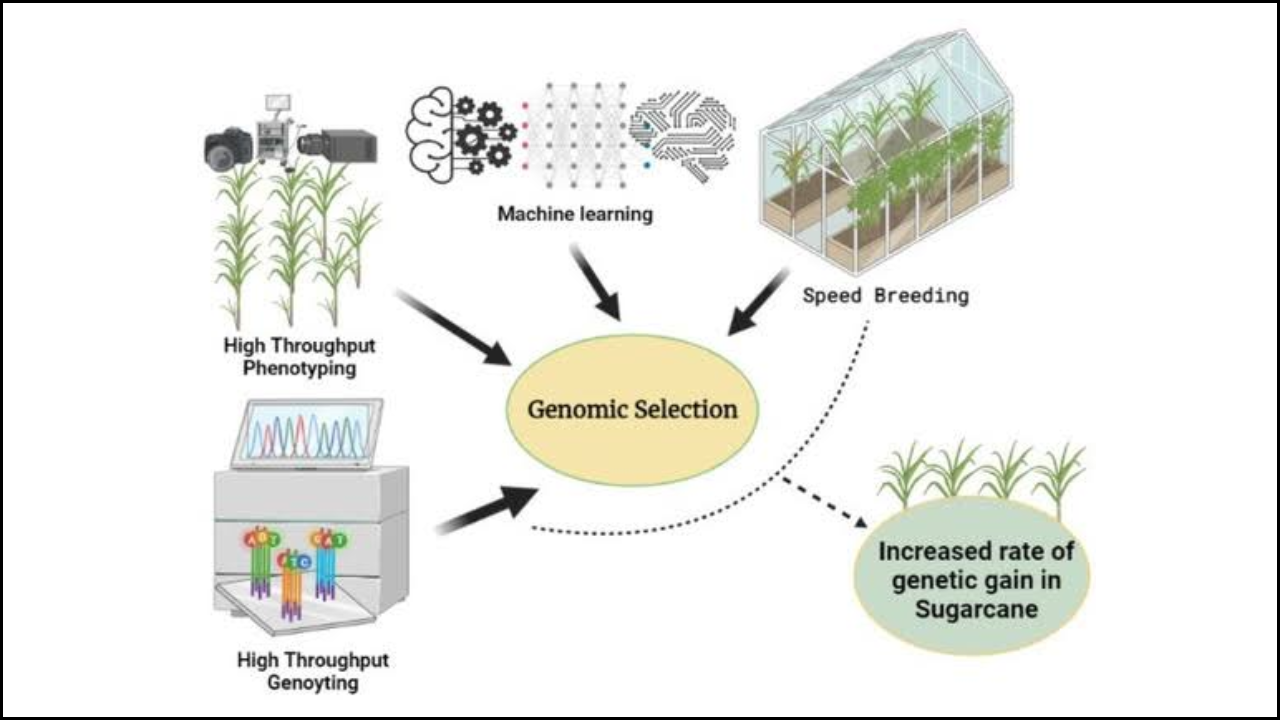
Molecular markers and genomic selection allow breeders to predict hybrid performance based on parental genotypes, accelerating the development of superior hybrids. Marker-assisted selection ensures that favorable allelic combinations are maintained in breeding programs.
Challenges in Exploiting Heterosis
Despite its advantages, hybrid sorghum breeding faces challenges:
- Hybrid seed production requires reliable male sterility systems and skilled management.
- Maintaining genetic purity and preventing inbreeding depression in parental lines is essential.
- Heterosis levels vary across environments, requiring multi-location testing.
- Seed costs for hybrids may be higher than open-pollinated varieties, affecting farmer adoption.
Addressing these challenges requires careful breeding design, quality control, and extension support for seed distribution.
Final Analysis
Hybrid vigor in sorghum offers a powerful tool for increasing yield, resilience, and biomass production. Understanding the genetic mechanisms, selecting complementary parental lines, and employing advanced breeding strategies enable breeders to develop superior hybrids that meet the demands of farmers and markets. The integration of molecular and genomic tools further enhances the efficiency and precision of hybrid development, ensuring that sorghum continues to be a reliable and productive crop in the face of environmental and economic challenges.