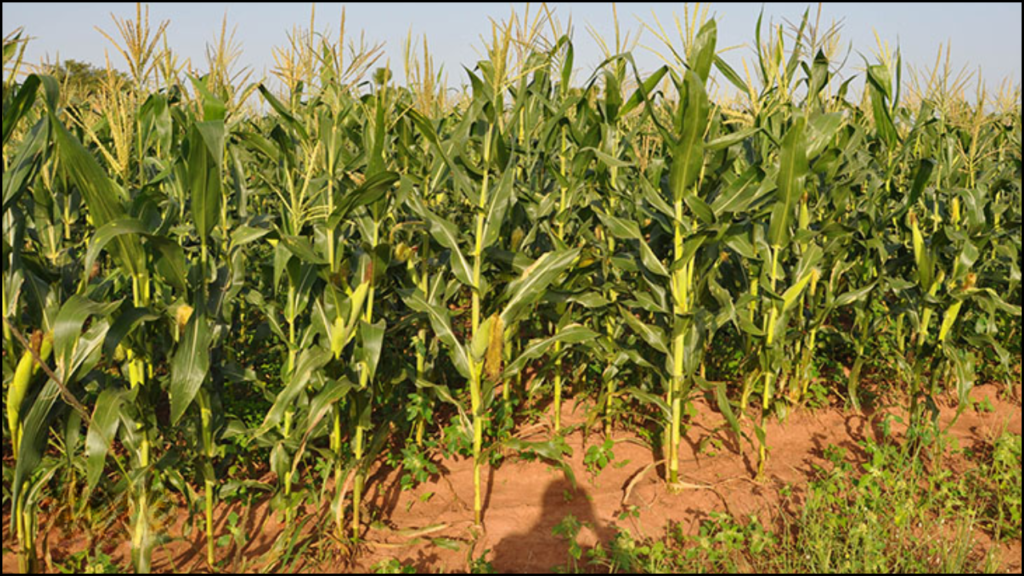
Plant density is a critical agronomic factor that directly influences maize growth, yield formation, and grain quality. In maize production systems, improper spacing can limit resource availability or create excessive competition among plants. Achieving the right balance in plant population is essential for maximizing productivity while maintaining grain quality.
Maize responds sensitively to changes in plant density due to its growth habit and nutrient requirements. Understanding how density affects light interception, nutrient uptake, and canopy development helps farmers make informed decisions that support consistent yields and marketable grain quality.
Table of Contents
Overview: Plant Density Influence on Maize
| Density Factor | Impact on Crop Performance |
|---|---|
| Low Density | Underutilization of land resources |
| Optimal Density | Balanced yield and quality |
| High Density | Increased competition and stress |
| Light Availability | Influences photosynthesis |
| Nutrient Uptake | Affects grain development |
Growth Response
Maize growth is strongly influenced by the number of plants per unit area. At low densities, individual plants grow larger with more leaf area, but overall field productivity remains limited due to fewer plants contributing to yield. Excessive spacing often results in inefficient use of sunlight, water, and nutrients.
At higher densities, plants compete for limited resources, which can restrict growth and reduce individual plant vigor. Optimal density creates a balanced environment where plants efficiently capture sunlight and utilize available resources, leading to uniform growth and improved crop performance.
Yield Formation
Yield formation in maize depends on kernel number, kernel weight, and ear development, all of which are affected by plant density. Moderate plant populations allow each plant to develop well-formed ears with sufficient kernel filling. Overcrowding, however, often reduces ear size and kernel number due to stress.
Balanced density ensures that the cumulative yield per hectare is maximized without compromising individual plant productivity. Proper spacing also supports efficient pollination, reducing the risk of poor kernel set and uneven grain development.
Quality Impact
- Kernel size and uniformity
- Grain moisture content at harvest
- Starch and protein balance
- Market acceptability
Plant density plays a key role in determining maize grain quality. High-density planting can lead to smaller kernels and higher moisture content, affecting storage and processing quality. Reduced airflow within dense canopies also increases disease risk, further compromising grain quality.
Optimal density supports uniform kernel development and desirable grain characteristics. Quality improvements achieved through proper spacing enhance the economic value of maize, making density management an important consideration beyond yield alone.
Resource Competition
- Increased competition for nutrients
- Reduced soil moisture availability
- Limited light penetration within the canopy
- Higher stress under unfavorable conditions
As plant density increases, competition for nutrients and water intensifies. Dense canopies limit light penetration, reducing photosynthetic efficiency in lower leaves. This stress can weaken plants and make them more susceptible to lodging and disease.
Managing plant density according to soil fertility and moisture availability helps reduce competition-related stress. Fields with higher fertility and reliable rainfall can support higher plant populations, while low-resource environments benefit from moderate densities.
Canopy Structure
Canopy structure is directly shaped by plant spacing and density. Proper density creates a well-distributed canopy that intercepts sunlight efficiently while allowing sufficient airflow. This balance reduces humidity levels and limits disease development.
Well-structured canopies also support better photosynthesis and nutrient distribution. By optimizing canopy architecture, farmers can enhance both yield potential and crop health throughout the growing season.
Management Decisions
Plant density decisions should consider hybrid characteristics, soil conditions, and climatic factors. Modern maize hybrids often tolerate higher densities due to improved stress resistance, but excessive crowding still poses risks. Density adjustments should align with expected rainfall and nutrient availability.
Regular field evaluation helps determine whether current density levels are achieving desired outcomes. Fine-tuning spacing practices allows farmers to adapt to changing conditions and maintain optimal yield and quality levels.
Final Analysis
The effect of plant density on maize yield and quality is a balance between maximizing plant numbers and minimizing competition. Optimal density supports efficient resource use, uniform growth, and high-quality grain production. By aligning plant population with field conditions and hybrid traits, farmers can achieve sustainable maize yields while preserving grain quality and crop health.