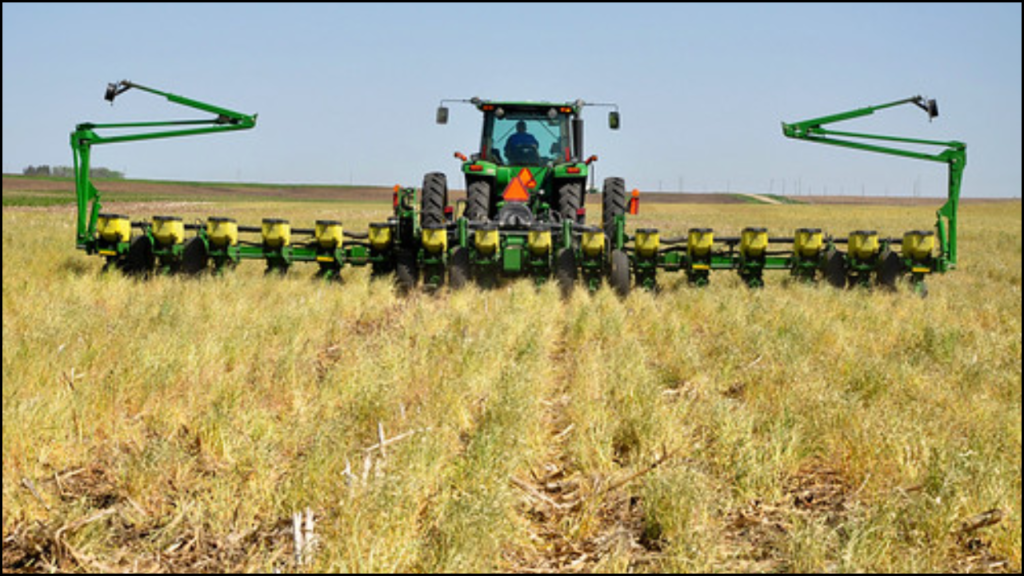
Farming systems have evolved to balance productivity, soil health, and environmental sustainability. Conventional and no-till farming represent two contrasting approaches that influence soil structure, crop performance, and long-term land use. Understanding their differences helps farmers choose practices aligned with local conditions and sustainability goals.
This article presents a detailed comparison of conventional and no-till farming systems, focusing on soil health, crop yield, resource use, and environmental impact. The analysis highlights how each system affects agricultural efficiency and long-term sustainability.
Table of Contents
Conventional vs No-Till Farming Systems
| Aspect | Conventional Farming | No-Till Farming |
|---|---|---|
| Soil Disturbance | High soil inversion | Minimal soil disturbance |
| Residue Management | Crop residues removed or buried | Crop residues retained |
| Weed Control | Mechanical and chemical | Mostly chemical and cover-based |
| Moisture Retention | Lower moisture conservation | Higher moisture retention |
| Soil Health | Gradual degradation risk | Improved long-term soil health |
System Overview
Conventional farming relies on regular plowing and tillage to prepare seedbeds, control weeds, and incorporate residues. This system has been widely adopted due to its simplicity and immediate field cleanliness. Tillage loosens soil temporarily, creating favorable conditions for early crop establishment.
No-till farming minimizes soil disturbance by planting crops directly into residues from previous harvests. Soil structure remains intact, and natural biological processes are preserved. This system emphasizes soil protection, residue retention, and reduced mechanical intervention.
Soil Structure
Soil structure is significantly affected by the degree of tillage. Conventional tillage disrupts soil aggregates, leading to temporary looseness followed by compaction over time. Repeated disturbance weakens soil stability and increases erosion susceptibility.
No-till systems preserve natural aggregation and pore continuity. Undisturbed soils develop stronger structure, better aeration, and improved root penetration. Over time, this leads to enhanced soil resilience and improved physical health.
Moisture Dynamics
- Faster moisture loss from exposed soil
- Higher evaporation rates
- Greater irrigation dependency
- Uneven moisture distribution
Conventional systems expose soil surfaces, accelerating evaporation and moisture loss. This makes crops more vulnerable to drought stress, especially in dry or semi-arid regions. Frequent irrigation may be required to maintain adequate moisture.
No-till systems retain crop residues that act as mulch. Residue cover reduces evaporation, improves infiltration, and maintains stable moisture levels. This advantage supports crop growth under variable rainfall conditions.
Weed Management
- Mechanical weed removal
- Soil disturbance-based control
- Higher fuel and labor use
- Short-term weed suppression
Conventional farming manages weeds through plowing and cultivation, which uproots existing weeds. While effective in the short term, this method often brings buried weed seeds to the surface, encouraging new germination.
No-till farming relies on surface residue, crop competition, and targeted herbicide use. Residue cover suppresses weed emergence by limiting light exposure. Over time, consistent no-till practices reduce weed pressure naturally.
Nutrient Cycling
Tillage influences how nutrients move and are retained in the soil. Conventional tillage accelerates organic matter breakdown, releasing nutrients quickly but reducing long-term soil fertility. Nutrient losses through erosion and leaching are more common.
No-till systems enhance nutrient cycling by preserving organic matter on the soil surface. Decomposition occurs gradually, ensuring sustained nutrient availability. Improved microbial activity supports efficient nutrient uptake and retention.
Crop Yield
Crop yield outcomes vary depending on climate, soil type, and management skill. Conventional systems often show higher yields in early adoption due to rapid soil warming and easy seed placement. These benefits may decline as soil structure degrades.
No-till yields may initially lag during transition periods. However, as soil health improves, yields stabilize and often match or exceed conventional systems. Long-term yield consistency is a key strength of no-till farming.
Environmental Impact
Environmental sustainability differs significantly between the two systems. Conventional tillage increases erosion risk, greenhouse gas emissions, and fuel consumption. Soil disturbance accelerates carbon loss and reduces biodiversity.
No-till farming reduces erosion, enhances carbon sequestration, and lowers fuel use. Residue retention protects soil and supports diverse soil organisms. These environmental benefits contribute to climate-resilient agricultural systems.
Operational Efficiency
Operational efficiency depends on labor, fuel, and equipment requirements. Conventional systems require multiple field passes for plowing, harrowing, and cultivation. This increases time, cost, and energy consumption.
No-till systems reduce field operations significantly. Fewer passes save fuel, reduce labor demand, and lower machinery wear. Improved efficiency supports cost-effective and scalable farming practices.
Economic Considerations
Initial investment and long-term costs differ between systems. Conventional farming often has lower initial equipment costs but higher recurring expenses for fuel and labor. Soil degradation can increase costs over time.
No-till systems may require specialized planters and weed management strategies initially. However, reduced operational costs and improved soil productivity enhance long-term profitability and financial stability.
System Adaptation
Successful adoption of either system depends on local conditions and management expertise. Conventional systems adapt quickly to short-term production goals but may struggle with sustainability challenges. No-till systems require patience and knowledge during transition periods.
Adaptive management, proper residue handling, and crop rotation improve system performance. Selecting the appropriate system involves balancing productivity, environmental goals, and long-term land stewardship.
Looking Ahead
The comparative analysis of conventional and no-till farming systems highlights clear trade-offs between short-term convenience and long-term sustainability. Conventional farming offers immediate control and ease of management, while no-till farming promotes soil health, moisture conservation, and environmental protection. Choosing the right system depends on regional conditions, resource availability, and sustainability objectives, with no-till farming offering strong advantages for long-term agricultural resilience.